
An update from the north
First GPS tags of the season deployed, artificial light experiments begin, and chick hatching gathers pace.

It’s 10.30pm. The sky is dark and moody, but there is still just enough light to make out the fleeting silhouettes of small seabirds careering about the vast boulder scree in front of me: bat-like in flight, zig-zagging and fluttering overhead with rustling wingbeats. The purring song and hiccuping calls of these mysterious creatures begin reverberating from beneath the rocks and boulders around me. The air is completely still, unusually for the Faroe islands, which makes this soundscape even more atmospheric. What I’m witnessing is the World’s largest population of European Storm Petrels awakening as darkness descends. Birds returning to the colony from the sea to feed hungry chicks, and perhaps others heading to their nest to swap incubation duties with their partner. It’s a remarkable scene, even if most of it is invisible to the eye. Untangling these birds’ fascinating lives is what has brought me to this spot. I catch my breath, wrap on a few more layers and embark on the long night ahead to retrieve a GPS tag from just one of these returning oceanic wanderers…
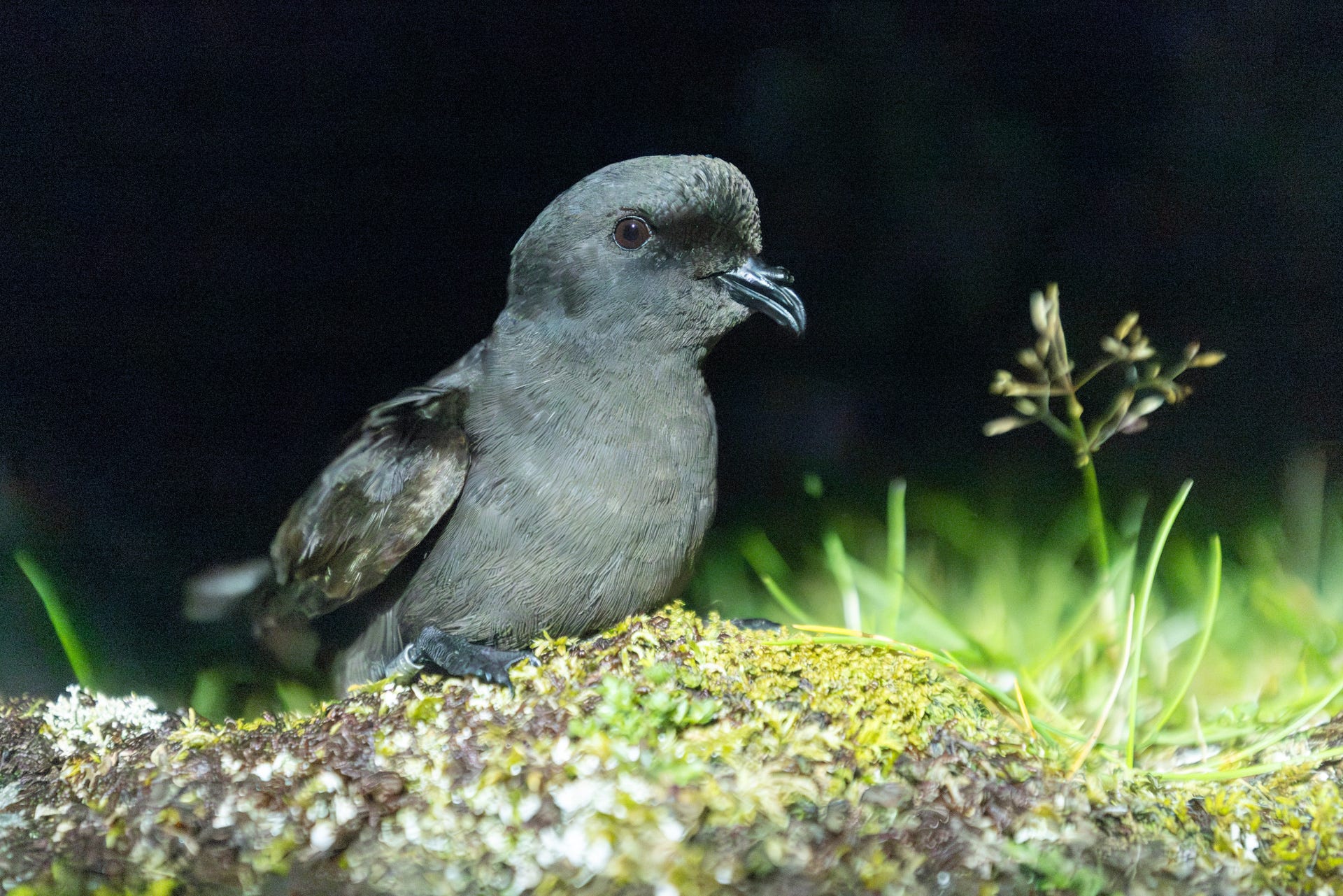
A bit of a belated update on the latest research activities from out here in the Faroes. Whilst the UK (and much of Europe for that matter) has been cooking under another record breaking summer, it’s been fairly typical Faroese weather here in the north, albeit with an impressive week-long period of dry conditions. At the same time, though, the conditions in the wider North Atlantic have been very atypical; sea surface temperatures continue to break strong and severe marine heatwave categories in the waters south, west and north of the UK. This really doesn’t bode well for many seabird species, particularly those that feed on sand eels. And a very poor breeding season for puffins, arctic terns and kittiwakes in the Faroes can attest to that. But for the Storm Petrels we have so little information on their foraging behaviours that it’s difficult to know how they’ll respond to such conditions as yet. Such is just one question of many that might become clearer as this season’s research progresses! (maybe).
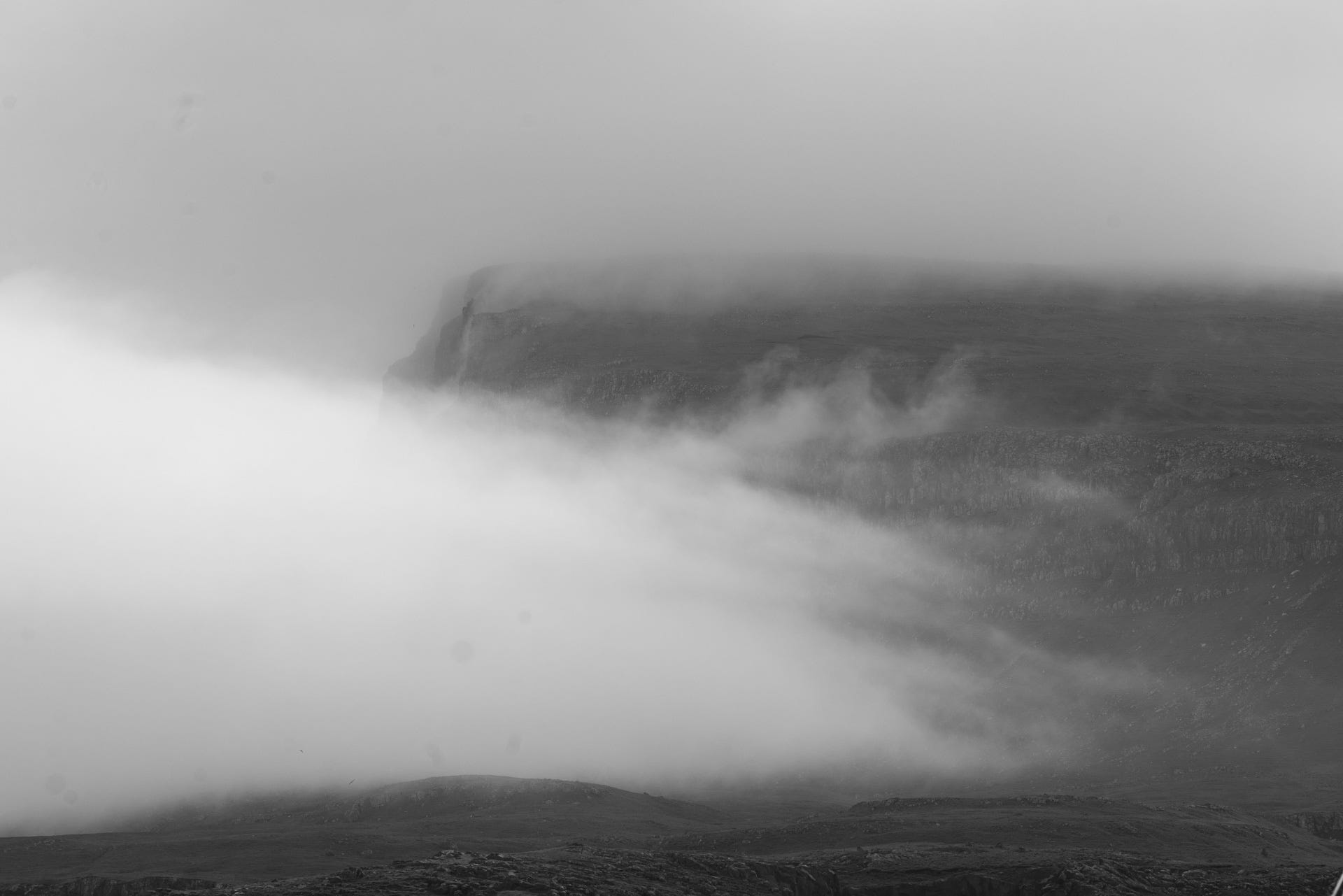
And so, since the last update, here are some of the main developments from our work here…
Chick hatching begins in earnest
After the first chick of the season hatched out in the nest boxes on August 15th, there was a bit of a hiatus until these last few days. But finally it feels like the rest of the birds are now following suite, with 11 chicks in the boxes as of August 29th. It looks set to be a record year for occupancy in the study boxes, which were so wonderfully constructed and installed by local legend Jens-kjeld Jensen over the last few years. So far we’ve had 55 eggs laid in the boxes, out of the 98 boxes that exist as of this year. We expect perhaps 70% of these to hatch, and hopefully most of the resulting chicks to fledge. Having so many birds nesting in the boxes this year means the prospects of GPS tracking a good sample of size of adult birds is very possible - with a provisional target of 20 birds.
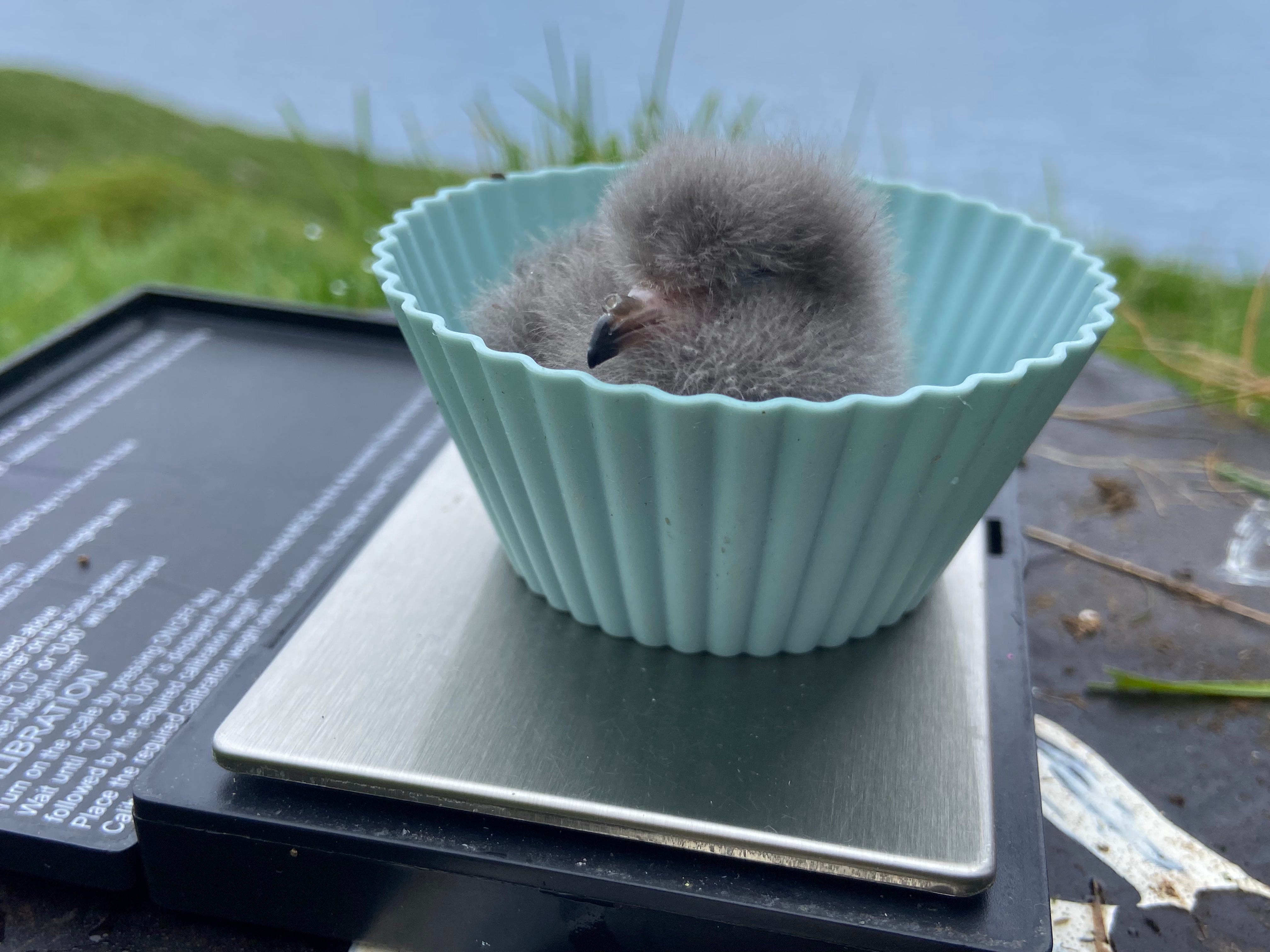
First GPS tag deployed!
It’s always an exciting (and mildly stressful) moment getting the first GPS tag of the season deployed on a Storm Petrel. Generally this tracking work requires waiting until the Storm Petrels progress into the chick rearing period, and when their little fluff ball is at least 5-7 days old before deploying a tag on one of the parents. This is a time when the Storm Petrels are least likely to abandon the nest due to the tagging procedure (which can happen on rare occasion), and is when the chick is large enough to thermoregulate in the nest during the day without its parents (the adults only visit at night for a short period to feed it). I deployed the first tag of the season with Feliksa and Trevor on August 22nd, and will now wait another few days before trying to retrieve the tag and find out where the bird has been! Watch this space.


Transect finished and nailed in place
After several weeks of near-daily pilgrimages to the more inaccessible southern realm of the boulderfield, the transect is now finished - we’ve managed to visit enough times to build up a clear picture of where every Storm Petrel nest is in the area covered by the transect line. This provides a reasonable estimate of the Storm Petrel population size for this sample area of the colony, and this can now be compared to the results achieved in 2013 to assess whether any significant population change has occurred in that time. As we finished the survey, we were able to affix some stainless steel screws into the boulders across the transect site to help further repeats of the site find the exact location - something that took some time when I set out to start this work earlier this summer! Now it just remains to visit once more to find all the tags we left out on each nest, and to bring in the hundreds of metres of string marking out the transect!
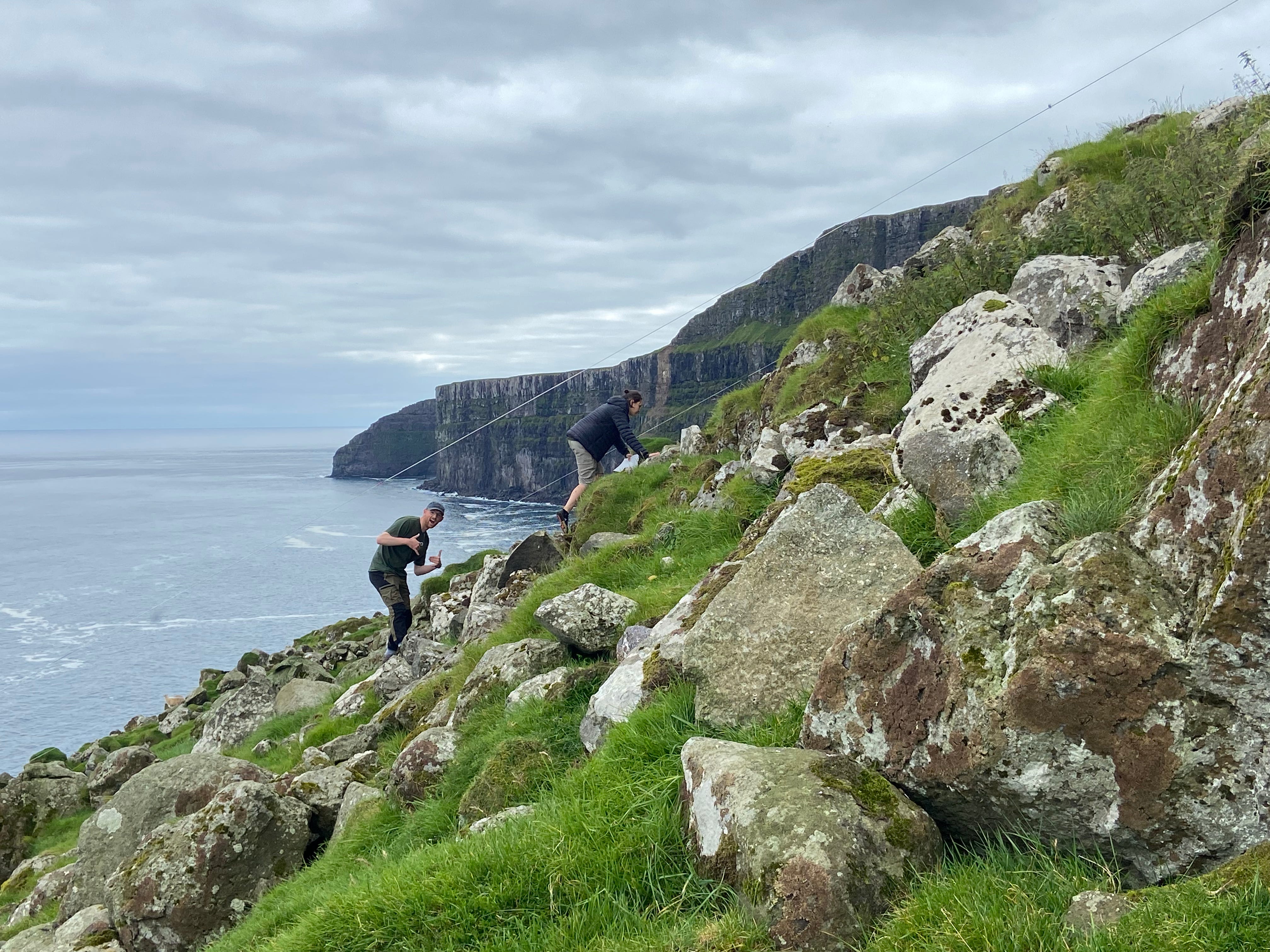
Feliksa departs and cameras now semi reliable (touch wood)
It was sad to say goodbye to Feliksa on Monday as her trip in the islands came to an end. Her tireless work with the befuddling raspberry pi cameras these last few weeks has been such a huge help, as well as all the additional help she’s given to other aspects of the work whilst here. After some incredibly frustrating times wrangling the nest cameras into some form of working order, she has managed to leave us with five fairly reliable units which can now be deployed regularly across the nest boxes during the rest of the season. We’ll be continuing to use these to document the parental coordination behaviour of adult birds in the nests, as well as assessing the effects of the GPS tagging work on these birds. Thank you Feliksa! We’ll be collaborating over the coming year to analyse the camera footage and write up some interesting work on these topics.


Koltur trip for half the team
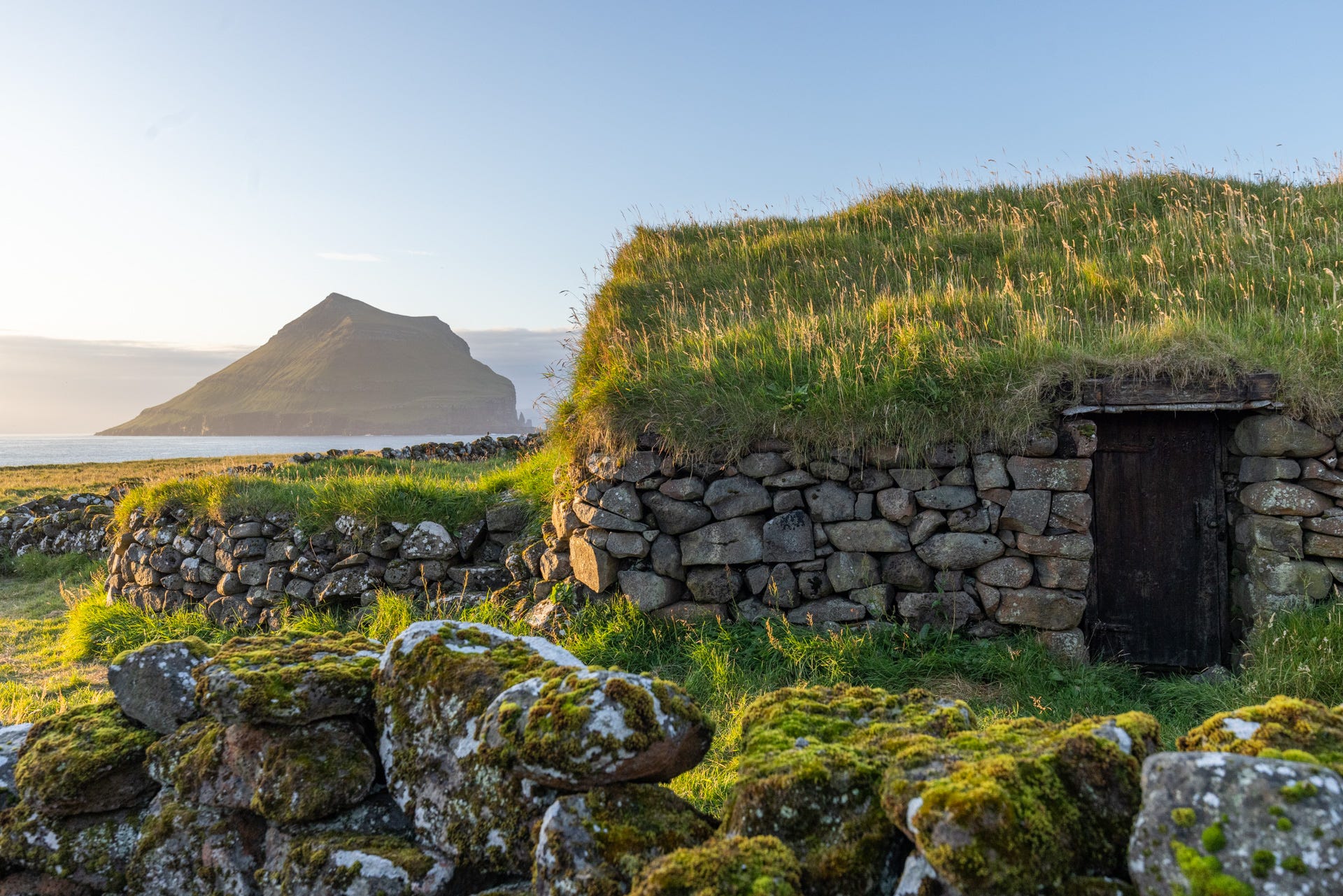
Two weeks ago, half of the team headed off to the island of Koltur to take a look at the Storm Petrel population there and lay the groundwork for some GPS tracking work which will hopefully take place in September. Anne, Jason and Trevor joined Jón Aldara from the Faroes National Museum to map out this season’s Storm Petrel nest sites and assess what period of the breeding season they are in. The petrels on Koltur nest in a very different context to those on Nólsoy - using burrows in the old earth banks and crevices in the dry stone walls. They even nest inside some of the traditional stone huts on the floor, with a Storm Petrel nest in each corner of the turf-roofed house! The team located 106 nests across the the walls and banks on the island, some of which had young chicks but most of which were still on eggs at the time. We will now plan to return to the island in mid September to deploy GPS tags on adult birds from some of these nests…an exciting prospect!
Lighting experiments begin
One of the activities that will dominate my nights for the coming two weeks are the so-called ‘lighting experiments’. This work forms a key part of my PhD to understand more about how artificial light impacts seabirds like Storm Petrels. Many seabirds, especially burrow-nesting species like Storm Petrels, are highly sensitive to the array of artificial lights that now dominate our night skies. However, not all lights are equal. Different species differ in their sensitivity to different colours and wavelengths of light. For the Storm Petrel, we don’t really know what colours of light are more impactful to them, and so these lighting experiments aim to reveal this. In practise, the experiments involve sitting out in the Nólsoy colony for the darkest hours of the night with a bright torch, and recording the birds’ response to different coloured filters using a thermal imaging camera. The last week of August has seen very settled conditions with dense mist at night - perfect conditions for understanding the birds’ response to these lights, as it’s often in these conditions that collisions and ‘grounding’ occurs in brightly lit towns, villages, ships and other such lit places. It’s a little early to fully understand the patterns observed so far, but provisionally it seems that blue, green and white light all similarly impact the Storm Petrels, but no collisions or adverse response has occurred under red light. Already a useful insight, if not already partially suspected given the knowledge out there on such interactions. More to follow!


Puffin chick fledges!
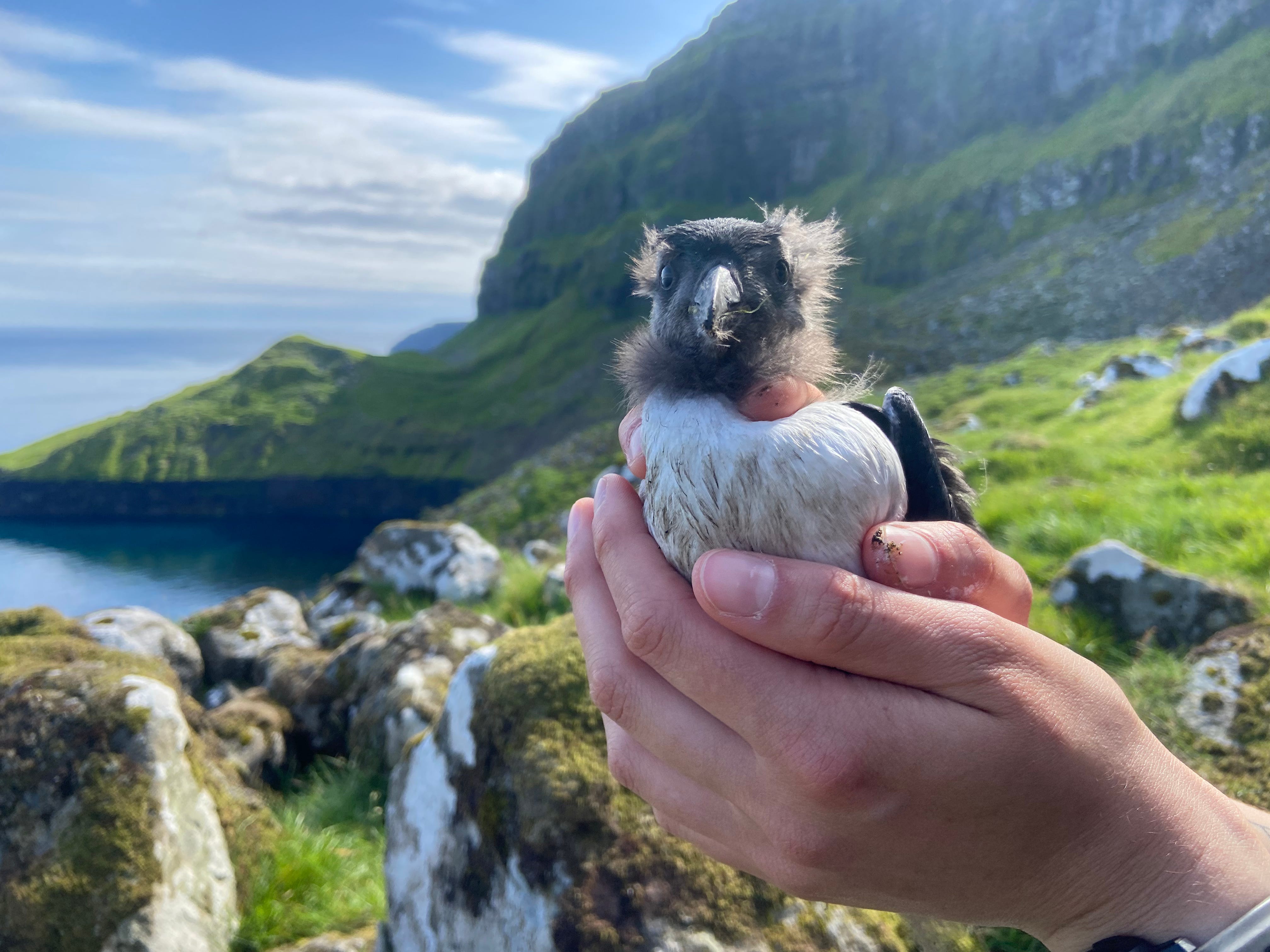
It’s not been an easy season for Puffins in the Faroes. With such poor foraging conditions and low survival of chicks, we weren’t holding our breath for the chick being reared in one of our study boxes. But amazingly it did finally reach fledging age, albeit at a paltry 160 grams - 200 grams lighter than it should be at fledging. It left the nestbox on August 20th, and we really hope it managed to make the journey through the boulder field and out to the sea, before finding it’s way out into the wide Atlantic seas. Best of luck Puffling! I really hope conditions will improve for winter foraging and the 2026 breeding season.
And so the fieldwork season continues. Next time I send out an update I hope to have some exciting foraging tracks back from the first tag retrievals. But we shall see - many long nights lie ahead before this point, and the Storm Petrels are unlikely to make it easy work!